Quick answer: Follow the care instructions for the exact tumbler first. For everyday use, rinse it promptly, clean removable parts, let every piece dry fully, and avoid assuming that a decoration or lid is dishwasher-safe unless the listing says so.
Treat the product instructions as the source of truth
Product-specific source: Materials, included parts, and care limits must come from the exact item—not a generic tumbler article. Recheck the current Playful Polka 20 oz Straw Tumbler listing before washing or ordering; if its instructions change, the listing takes priority over this routine.
Tumblers can differ in materials, coatings, lids, and printed finishes. General internet advice cannot replace the instructions attached to the exact item. Check the listing and any care information included with the product before using heat, a dishwasher, or abrasive tools.
Create a simple after-use routine
Do not let residue sit longer than necessary. Empty the tumbler, rinse it, separate the lid and straw when appropriate, and clean areas where liquid can collect. A soft tool is a cautious default, but the product’s specific directions should decide the method.
Dry before reassembling
Moisture trapped under seals or inside a straw can create odor. Let the pieces dry completely in an open, ventilated position. Inspect removable parts periodically and stop using any damaged component until it can be addressed.
A real product example
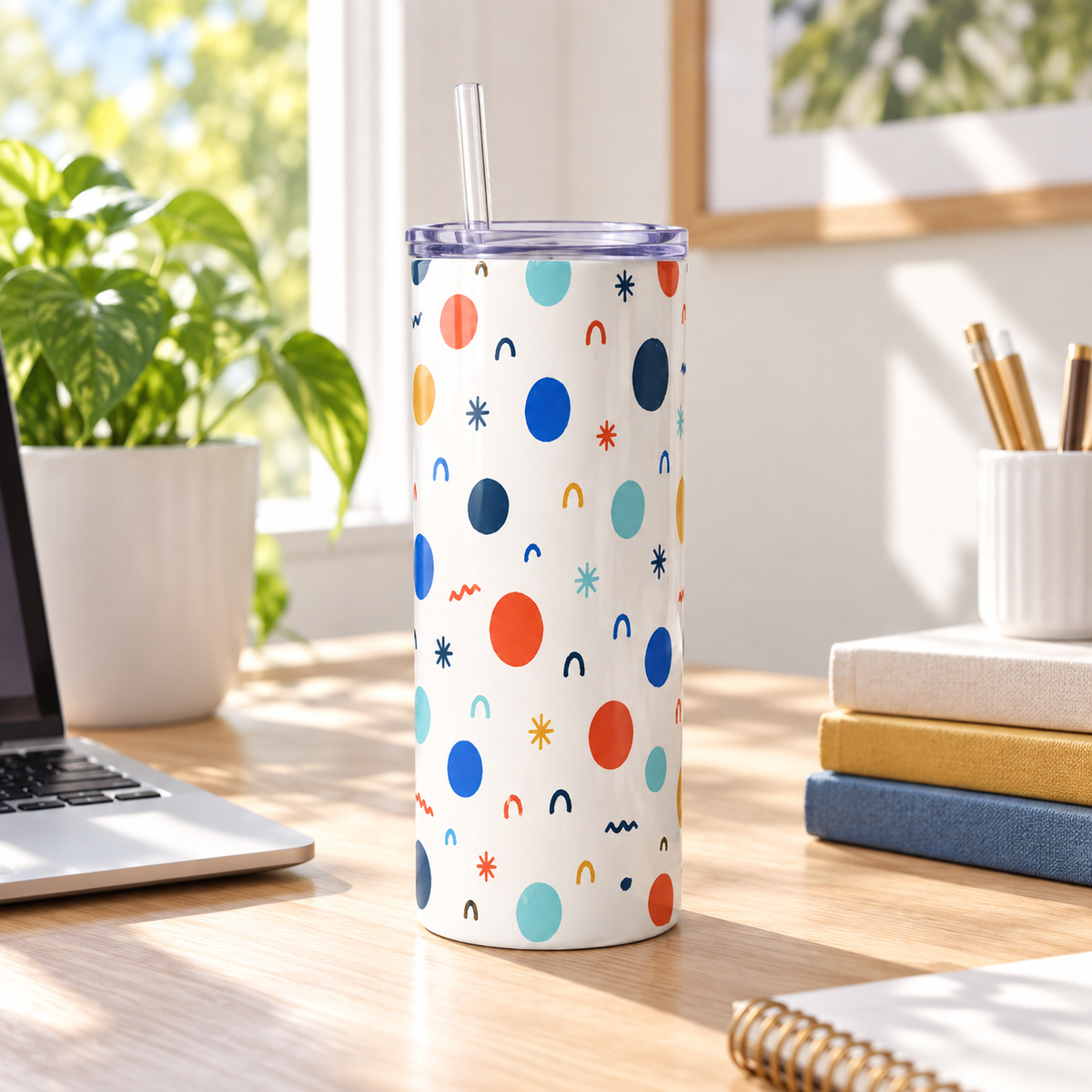
The Playful Polka 20 oz Straw Tumbler is designed around a colorful everyday-use format. Check its current listing for the exact care directions and included components before cleaning or replacing any part.
Practical checklist
- Read the exact care notes.
- Rinse soon after use.
- Clean lid and straw areas carefully.
- Dry every piece before reassembly.
- Avoid unverified dishwasher or heat claims.
Frequently asked questions
Can I put it in a dishwasher?
Only if the exact product instructions say that you can.
Why clean the lid separately?
Lids and seals can contain narrow areas that need direct attention.
How often should I inspect the straw?
Check it during regular cleaning and replace or stop using it if it becomes damaged.
Last reviewed: September 10, 2026. Product details and availability can change; verify the linked product page before ordering.
Know the parts that need separate attention
| Part | Daily care focus | Warning sign |
|---|---|---|
| Cup body | Soft sponge, mild soap, prompt rinse | Odor, residue, or abrasion near the print |
| Lid | Remove and clean grooves and seals | Sticky movement or trapped liquid |
| Straw | Use a narrow brush through the full length | Film, discoloration, or blocked flow |
| Seal or gasket | Inspect, rinse, and dry separately | Warping, cracking, or persistent odor |
Match care to the drink routine
Water usually leaves less residue than sweetened coffee, protein drinks, juice, or milk-based beverages. After anything sugary or creamy, rinse soon and clean the lid and straw rather than leaving the tumbler closed for hours. The current listing describes a 20 oz, 304 stainless-steel, double-wall vacuum-insulated tumbler with a clear lid and straw. It does not make a dishwasher claim, so do not invent one; follow the current care information or ask before using high heat.
Protect the artwork without making care complicated
Avoid abrasive pads, harsh powders, and scraping tools on the printed surface. Do not let the cup knock against metal objects in a sink or bag. Dry it upright with the lid removed so trapped moisture can escape. Once a week, inspect the rim, lid grooves, straw, and seal under good light. If an odor remains after ordinary cleaning, stop using the tumbler until the source is found.
Continue with a related decision
- Plan processing and transit time if the tumbler is a dated gift.
- Match a gift to a daily ritual when emotional relevance matters as much as the object.
- Browse current tumblers and verify the exact capacity, lid, and care notes on each listing.